
STUDENT OPINION
The Faraway State

Mugdha Pendharkar - MPP 2028
Published on : Nov 19, 2026
There is a sentence that every Indian has uttered at some point, and there's been somebody who has relied on hearing from another person. Do you need a driver's license to be renewed? I know a guy. Sorting out a land record? I know a guy. Attempting to secure a hospital bed or an application moved down the hall from one desk to another, only to be lost in a pile? There is somebody somewhere that knows a guy.
What is striking is how ordinary these people are! Most do not have political backgrounds and many certainly do not work in government. None of them have any real authority, yet they are the ones who can make things happen or can make sure that they do not.
None of the traditional explanations make sense. India is not a failed state. It organizes elections for hundreds of millions of people, launches satellites, and operates one of the world's biggest digital identity systems. By almost any account, the state is everywhere.
Then why should it take “a guy” to get there?
Corruption is a factor but one with limited expansion. More is explained by the inefficiency of the bureaucracy. The cultural explanation, that “Indians are just built that way”, is the least convincing of all, and it deflects the responsibility from structure toward personality, which is an easy place to put a problem that no one wants to solve. The truth is simpler. The Indian state is also missing. It is located in distance, not proximity.
A Constitution Written for Closeness
The Constitution of India was never intended to be a legal text only. Madhav Khosla calls it a pedagogical project – a means of educating the newly independent, recently colonized population about how to operate as citizens of a democratic republic, not subjects of one. The state was supposed to be at the side of the citizens, not on top of them. Some of that vision has been preserved. Votes still count and rights are exercised to a certain degree. What has taken its toll has been the direct contact, the experience of the citizen meeting the state directly, face to face.
It is best to see this through the other end of the table. Running a government of 1.4 billion people with a comparatively miniscule civil service is the state setting itself for a definite failure. Lant Pritchett called India a state that is “flailing” at doing big projects in a centralized manner, and that it is always weak at the numerous small local tasks that make up everyday life. This is how the state's fascination with digital infrastructure makes perfect sense.
AADHAAR, Direct Benefit Transfers, online grievance portals, these were not about modernization for its own sake. They were a solution to a real capacity issue and, to the credit of the government, Direct Benefit Transfers have transferred huge amounts of money directly to bank accounts, eliminating the layers of leakage in between.
This efficiency however, is paid for with a quieter price. The less personal governance is, the more it is automated. The citizen is kept as a record to be verified, a beneficiary number in a system designed for volumes, not people.
How Citizens Respond
Citizens in response have invented entire parallel systems to circumvent this impersonal, looming structure. It is true that government schools are within reach of most families and yet parents continue to pay for private tuition, something that is also documented by ASER surveys over the years. A huge public health care system may exist, yet families still go to private hospitals when they have the means to do so. Private security is employed in housing societies. Cities lean on water tankers and generators wherever the grid falls short.
While this may look like individuality on the surface, it is citizens almost training themselves to expect uncertainty from the state. Citizens begin creating alternatives when they lose trust in the existing system. The same reasoning is to be attributed to the rise of intermediaries. They are frequently depicted as parasites that take advantage of the cracks of dysfunction, and while that may be true in some cases, there are a lot of intermediaries for a much simpler reason: the institution in front of them doesn't explain itself. For many citizens, procedures are unclear, information is difficult to access, and navigating multiple departments often requires knowledge or connections that they may not have. Thus the intermediaries fill the gap and make the unreadable state readable. However, some intermediaries also exploit these gaps through demands for money or preferential treatment, reinforcing unequal access.
Present, Yet Never Quite Close
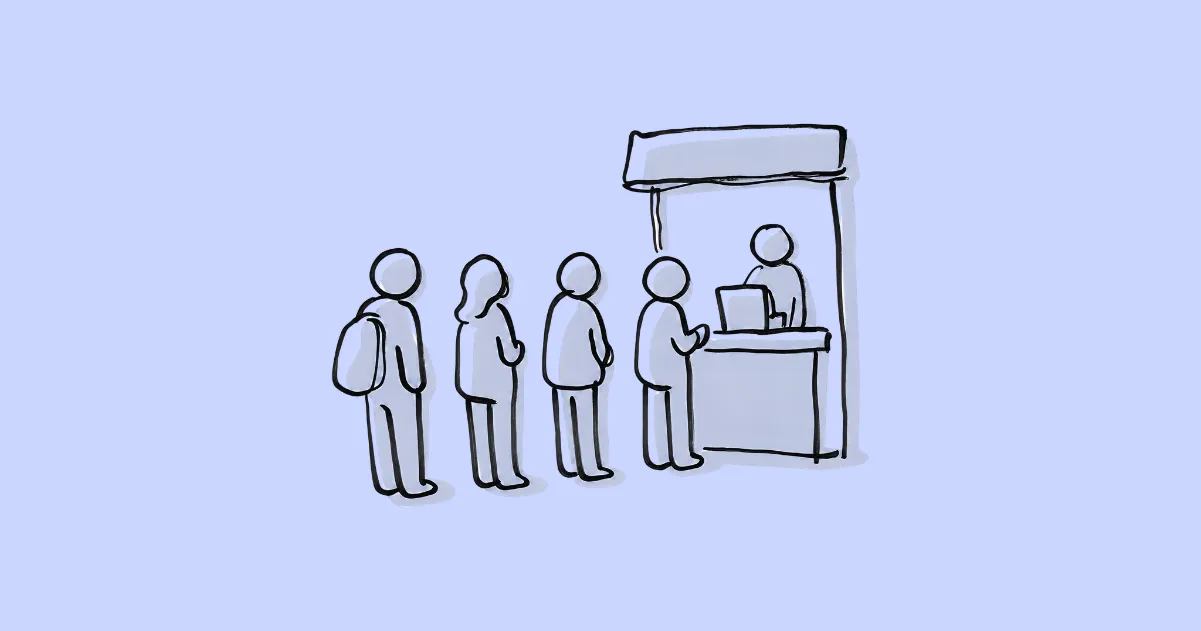
The true conundrum of the Indian government is its passive presence. The state is there: taxing, regulating, licensing, monitoring, constantly present, and yet for many, its presence remains elusive. Akhil Gupta describes how a delay by the bureaucracy can change the way citizens perceive an institution they are dealing with. Most people do not realize when the state disappears, they go through databases, banks, agents and clerks, and a “true representative of the state” never really shows up. While the state remains engaged throughout the process, it is not often seen up close.
Why Trust Campaigns Won't Solve This
The discussion around trust building rests on shaky ground. There's no slogan that can solve it, no awareness campaign that can fill a gap that is not rhetorical but structural. Citizens trust institutions when they can reliably anticipate how those institutions will act. Trust is less a product of goodwill than of reliability.
But the actual problem before Indian governance is not to find the lost connection between citizen and state, on the contrary, the two are so intermeshed that one can find no solution without the other. The challenge is to break through the layers of middlemen that stand between them. It may not have been the politician or the bureaucrat who best conveys the truth of the Indian government today. It could just be a “guy”.
In a constitutional democracy the most crucial relationship remains between a citizen and their state. After eight decades of Independence, if the state-citizen relationship still needs a translator, it is worth the scrutiny. Beyond nuanced digital dashboards and measurements of national prowess, the Indian state may need to come a little closer to its citizens. For millions of people today, it remains just out of reach.
*The Kautilya School of Public Policy (KSPP) takes no institutional positions. The views and opinions expressed in this article are solely those of the author(s) and do not reflect the views or positions of KSPP.
Rudraram, Patancheru Mandal
Hyderabad, Telangana 502329