
KAUTILYA OPINION
War Narratives: Shift beyond Major Powers

Rhythm Parashar - PhD Scholar
Published on : Jan 21, 2026
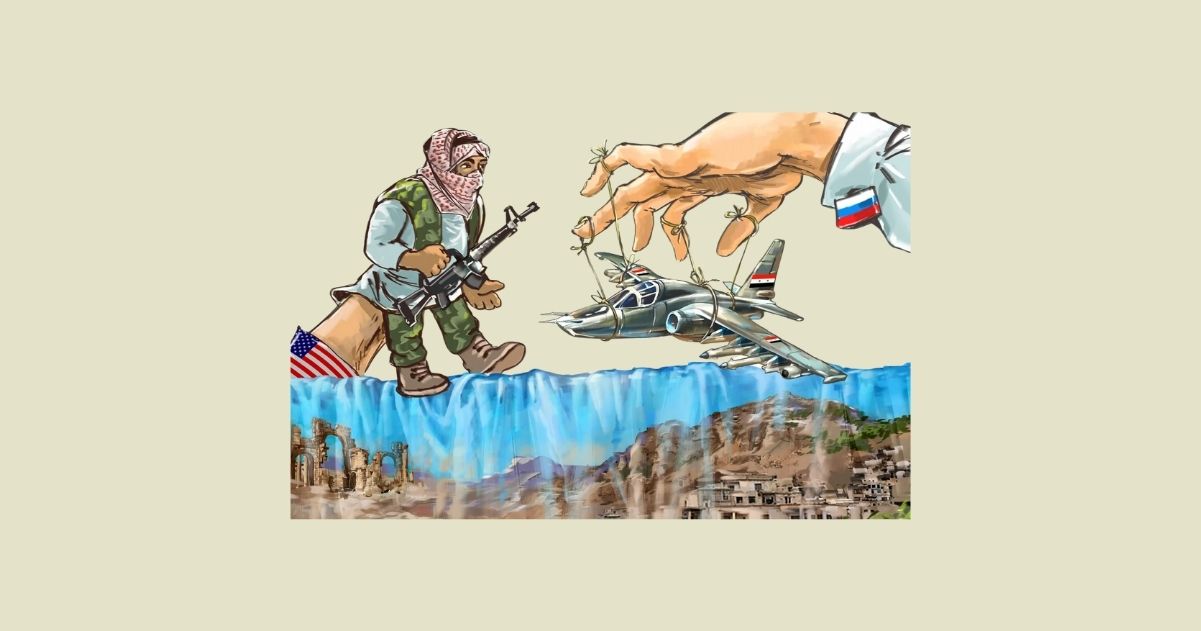
War narratives are the methods used by the global powers to justify the militarisation and their actions in war. Through war narratives, big powers exert their dominance over the smaller countries and curb their voices. They pretend to be both victors and the victims. They do this to side-line and marginalise the smaller nations. These narratives are very selective in nature. For example, everyone condemns the Rwandan Genocide, but the same amount of mass killings happening in Gaza has not yet been declared as genocide. This has been the norm in international relations, and to study this narrative construction, narrative analysis approach came into existence. In storytelling, it’s not just about the story, but who is narrating the story is equally important. The media, cinema, TV, and academia all play a great role in its construction. Hollywood is one of the biggest examples of this. In movies like Black Hawk Down, Zero Dark Thirty, Argo, etc., USA soldiers are shown as the war heroes. Through these movies, the USA is projecting to the world that its military is the saviour of the world.
Times when the big powers shaped the war narratives
During the Cold War, the USA completely tried to become the heroic figure of democracy, protecting freedom and completely vilifying the Soviet. The USA flooded the world with the idea that communism is a threat to humanity. The USA used the medium of radio and government-funded programs such as Voice of America and Radio Free Europe extensively to counter Soviet propaganda.
When the US was clearly losing the Vietnam War, it broadcast the images of dead US soldiers being ruthlessly killed by the Viet Cong and the North Vietnamese Army to play the victim card. It was termed as the “First Television War.” Some people bought this narrative.
Terrorism is the horror that has haunted various countries for ages. But it became a big thing only when 9/11 happened. The US controlled the narrative to justify its invasion of Iraq. Around 4,61,000 people died in Iraq between the USA-led invasion in 2003 and mid-2011. No accountability was taken whatsoever by the US for the civilian deaths.
These examples raised the serious question, “Is what happens on the front line exactly the same as what is communicated to the world?”
But does the fact that war narratives are always constructed by the big powers still hold relevance in contemporary times? If so, how do we explain the Israel-Palestine conflict, where Israel backed by Western powers has failed to fully suppress the Palestinian narrative? Israel is getting significant military and diplomatic support from the USA. Despite this, people all over the world are coming in support of Palestine, even though big powers have all the power to control the media, cinema and the public perception.
Why Israel Can’t Shut Down the Palestinian Narrative — Despite All Its Power
“History is written by the victors.” If this holds true, then Israel is definitely failing in this narrative game. One of the key reasons is the growing role of social media and the rise of individual journalism, which has shaped public opinion. Palestine activists and journalists are trying to break the dominance of the flow of information coming from the West. Hashtags like #Free Palestine garnered global attention. Major outlets like Al Jazeera are bypassing Western gatekeeping. Not just in Palestine, investigative journalism is on the rise within Israel itself to criticise the country. This is breaking the single authoritative version of Israel.
The humanitarian angle might be the other reason. On 12th June, 2025, the UN General Assembly passed the resolution demanding a permanent ceasefire in Gaza, the release of all hostages and the resumption of humanitarian aid to stave off famine. There were 149 votes in favour, 12 against – including Israel and the US – and 19 abstentions. This shows how Palestine is getting support from all over the world. The images of people being displaced, not getting the necessary aid and food, being killed and bombed mercilessly, sparked outrage worldwide. Another example is of the movie ‘The Voice of Hind Rajab’, which became the first film to get a 23-minute standing ovation in the history of the Venice Film Festival. It demonstrates how storytelling about a Palestinian child's tragedy can effectively transform the narrative of war worldwide. This massive response of the masses shows that authentic tales of suffering resonate with the hearts of people, which makes it difficult for dominant forces to manipulate the narrative. Public perception is increasingly rejecting Western narratives, recognizing that their power does not equate to righteousness.
Conclusion and the way forward
As Foucault puts it in his lecture series on Society must be defended, “What counts as 'truth' or legitimate knowledge—including narratives about war—are produced by power structures. Narratives about war thus reflect dominant power relations and serve to justify violence and policy.” War narratives are always partial in nature. They are being used to clear one’s own image or to spoil the image of the other nation. The idea of national heroism (defending oneself) versus the perpetrator is generated to create the “Us V/S Them” narrative. But these hegemonic narratives are being challenged. This narrative game is no longer controlled by the big powers.
The multipolarity is emerging in deconstructing the colonised and the Western narratives. The Palestinian narrative survives because people refused to accept the single authoritative truth of Israel. Smaller countries should push for digital diplomacy to build counter-narratives, leveraging the support of the regional organisations. Smaller countries can’t outpower the bigger nations in the traditional military conflict, but what they can do is build cross-network media outlets, using the diaspora to promote their narratives, fund the research centres, and make sure that their narrative has a global voice.
*The Kautilya School of Public Policy (KSPP) takes no institutional positions. The views and opinions expressed in this article are solely those of the author(s) and do not reflect the views or positions of KSPP.
Rudraram, Patancheru Mandal
Hyderabad, Telangana 502329